

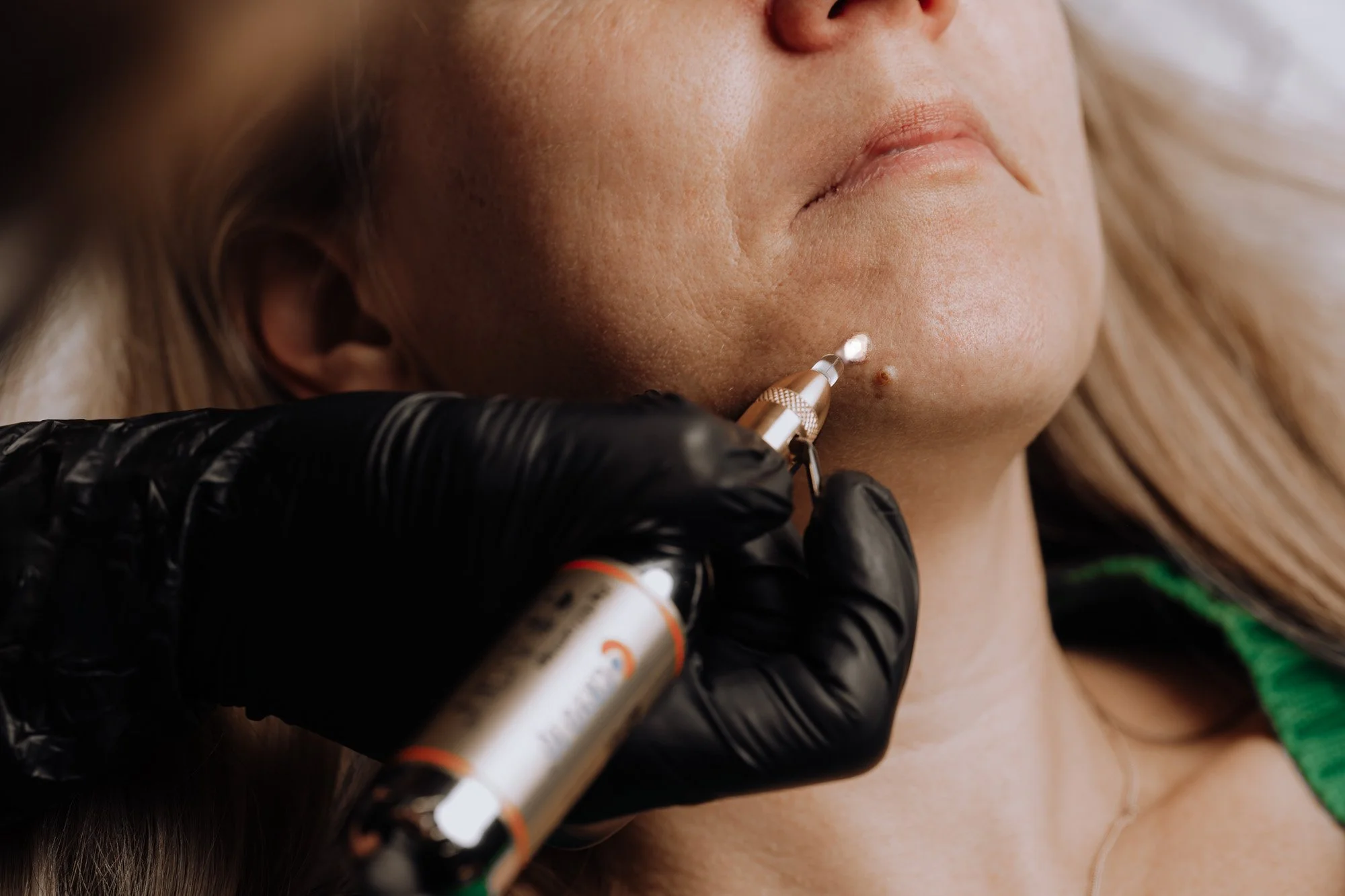
Clinical Protocol: Skin Tag & Blemish Removal
Pre-Treatment Safety, Expectations & Aftercare.
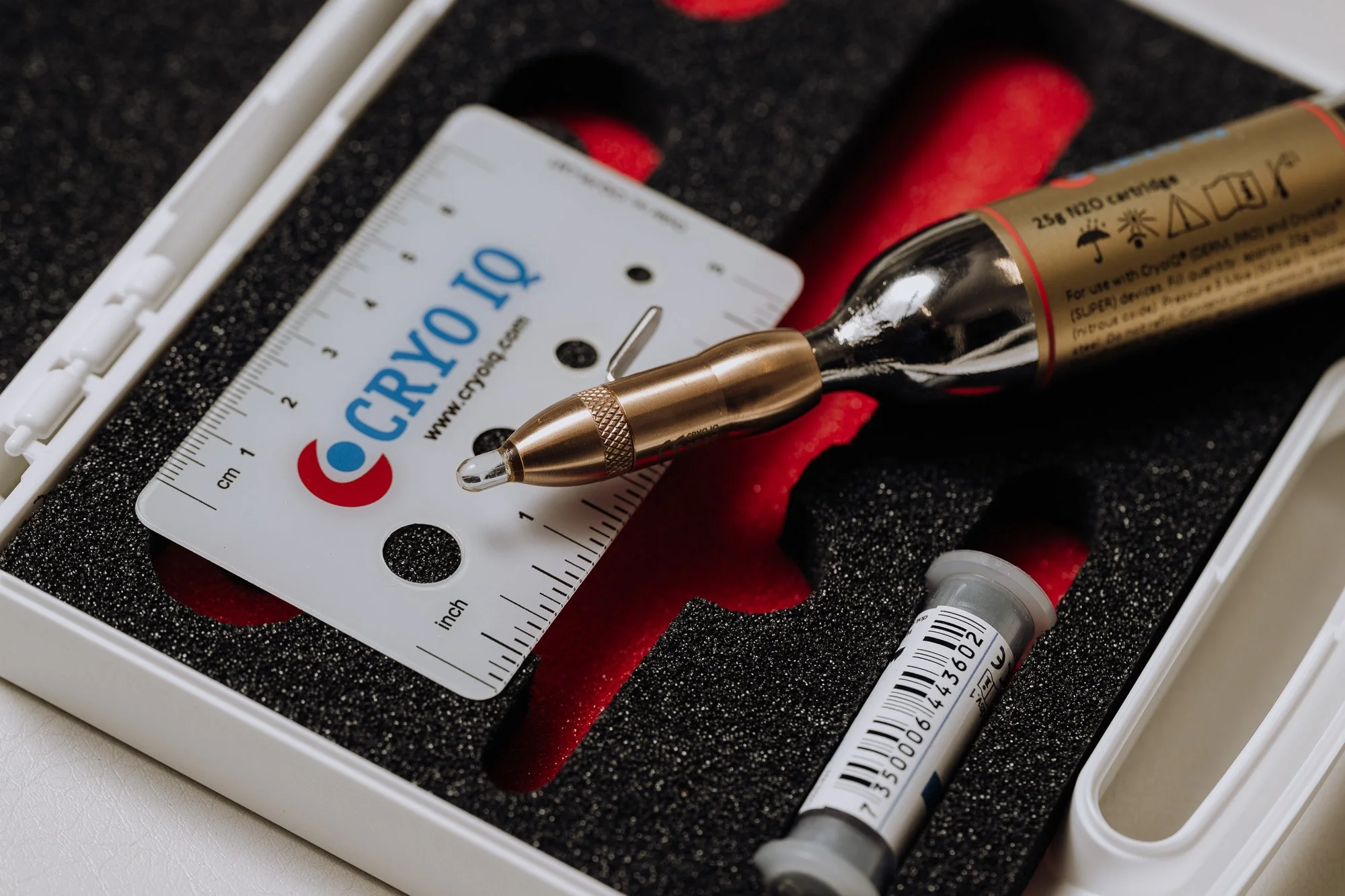
Realistic Expectations
The 'Scab' is Necessary
The most distinctive feature of a cryotherapy blemish removal is the natural healing process that follows the freezing.
The Appearance: You will leave my treatment room with the blemish looking darker, slightly raised, or red. Over the next few days, it will crust over and form a small scab. This is exactly what we want to happen; it means the targeted tissue has been successfully treated and fresh skin is forming underneath.
The Timeline:
Hours 0-24:
The area may feel slightly tender or look inflamed.
Days 1-3:
The blemish darkens significantly and a crust or scab begins to form.
Days 7-14:
The scab naturally lifts and falls away, revealing fresh, slightly pink skin.
Weeks 2-6:
The pink skin gradually fades and blends beautifully with your natural skin tone.
Subtlety:
This treatment specifically targets individual lesions. It is highly precise and will not damage the surrounding healthy skin, but absolute patience during the scabbing phase is required for the best cosmetic result.
Immediate Side Effects
Scabbing and Crusting:
As mentioned, this is guaranteed. You must let the scab fall off naturally on its own timeline.
Mild Stinging:
A slight stinging or tingling sensation during and immediately after the freezing process is normal and usually subsides within a few minutes.
Redness and Swelling:
A small halo of redness or minor swelling around the treated blemish is common for the first 24 to 48 hours.
Adverse Reactions
Cryotherapy is an incredibly safe procedure, but risks exist, primarily if the aftercare is not followed strictly.
Scarring:
The risk of scarring is very low unless the scab is picked, scratched, or forcefully removed before it is ready. If you pull the scab off, you risk permanent textural damage.
Hyperpigmentation (Darkening):
If the fresh, pink skin under the scab is exposed to the sun without high SPF protection, it can heal darker than the surrounding skin.
Infection:
Though rare, if the scab is broken prematurely, bacteria can enter. It is vital you keep the area clean and dry.
Misdiagnosis:
I will only treat benign (non-cancerous) blemishes. If I have any doubt about a lesion during our consultation, I will refuse treatment and advise you to have it checked by your GP first. Your health and safety are always my absolute priority.
The Aftercare Rulebook
To ensure the blemish heals perfectly and to prevent scarring, you must adhere to the following:
Do NOT pick, scratch, or rub the scab. You must let it fall off naturally.
Do NOT use harsh exfoliating skincare, retinols, or scrubs on the area until it is fully healed.
Do NOT expose the healing skin to direct sunlight. You must apply a high-quality SPF 50 daily once the scab has fallen off to protect the fresh skin.
Do NOT cover the area with heavy plasters or bandages; keep it clean, dry, and let it breathe.
Do NOT apply heavy makeup directly over the treated area for the first 24 hours.